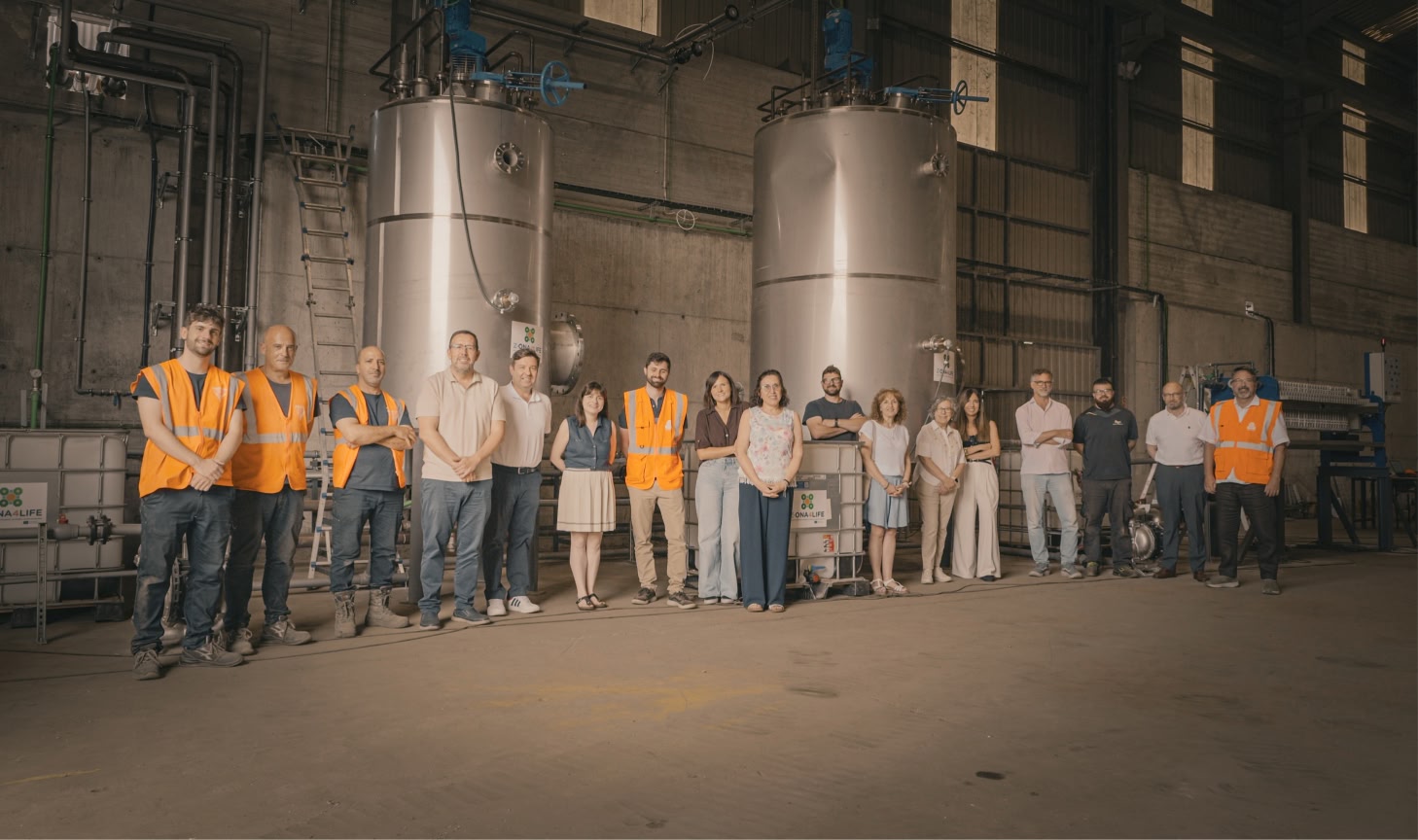
In June 2026, the Z-ONA4LIFE consortium gathered at Alusigma's facilities in Gijón, Asturias (Spain), to mark a significant moment in the project's journey: the near-completion of the first Z-ONA4LIFE pilot plant, built in close collaboration with engineering partners Ferrosadim and INDEREN.
During the visit, the consortium followed the full production journey step by step, from raw waste to finished zeolite, a process that begins with one of the aluminium industry's most challenging waste residues and ends with a material with real environmental and commercial potential. Here is how it works.
The foundry
It all starts here. In Alusigma's foundry, aluminium is recycled, and salt slag is generated as a waste residue. Produced at a rate of approximately 0.5 tons per ton of recycled aluminium, salt slag is classified as hazardous waste under European legislation, yet its aluminium oxide-rich composition makes it the key raw material at the heart of the Z-ONA4LIFE process.
Aluminium salt slag
Once generated, the salt slag is collected and prepared for processing. Based on laboratory studies carried out by the MEDES group at IETcc-CSIC, it is essential to obtain representative and homogeneous samples that accurately reflect the material's overall composition. This involves crushing, fractionation, and homogenisation using a 3D mixer, as well as characterisation through X-ray fluorescence and X-ray diffraction to determine its chemical and mineralogical properties.
Milling
The slag is then milled to reduce its particle size and ensure a consistent, workable material for the stages that follow. This mechanical pre-treatment is a critical step in preparing the waste for the chemical transformation ahead.
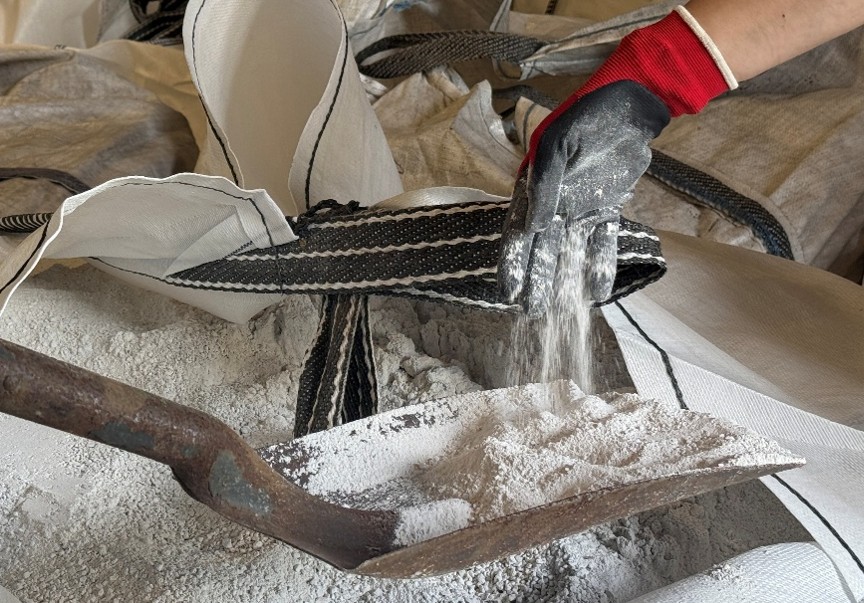
Hydrolysis
One of the most important steps in the entire process. Because salt slag has a high sodium chloride content, the salt must be removed before the material can be used as a raw material for zeolite synthesis. Through hydrolysis, a process whose optimal conditions were determined through extensive research by IETcc-CSIC, the salt is extracted under carefully controlled conditions, producing three distinct outputs that each play a role in the near-zero waste design of the process.
Hydrolysed slag, gases, and brine
The hydrolysis stage produces hydrolysed slag, now free of salt and ready for the next step, alongside gases and brine. Rather than being discarded, both the gases and the brine are recovered and treated. The brine, rich in sodium chloride, undergoes further processing to extract valuable chemical waste residues, including sodium carbonate and calcium chloride, two cornerstone chemicals in the European chemical industry.
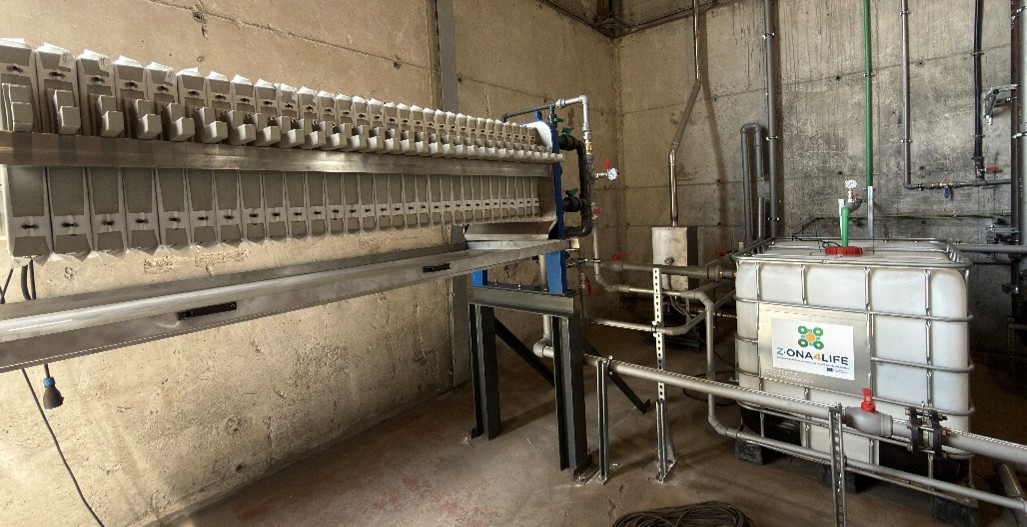
Hydrolysed slag combined with silicon-rich waste
Salt slag alone provides aluminium oxides, but zeolite synthesis also requires silicon. To adjust the silicon-to-aluminium ratio needed for the chemical composition of Z-ONA zeolite, the hydrolysed slag is combined with silicon-rich industrial waste. This combination of two waste streams is one of the most distinctive features of the Z-ONA4LIFE approach: turning two problems into one solution.
Zeolite synthesis
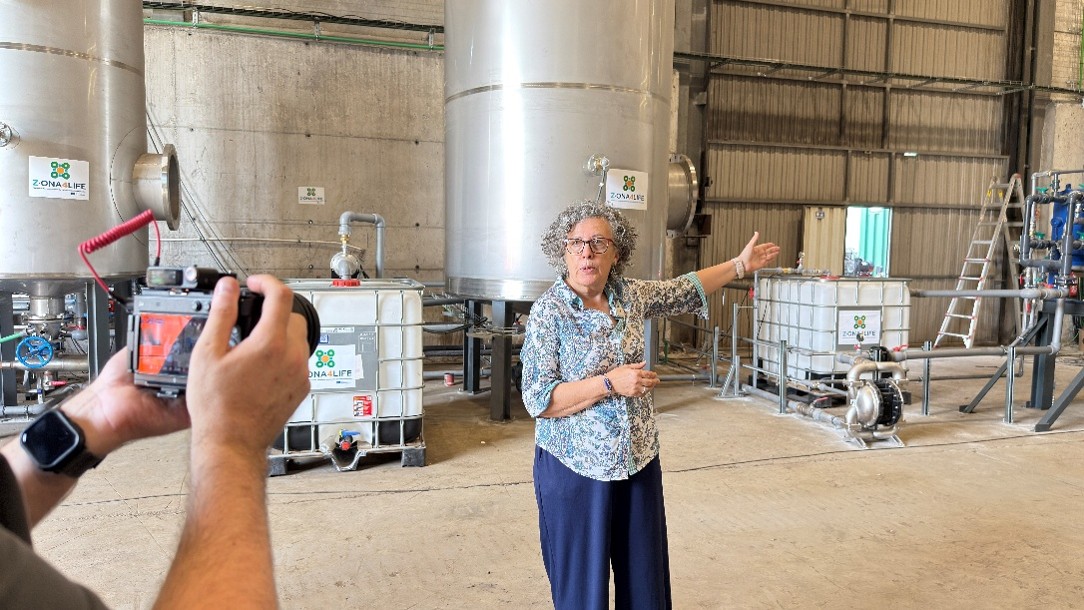
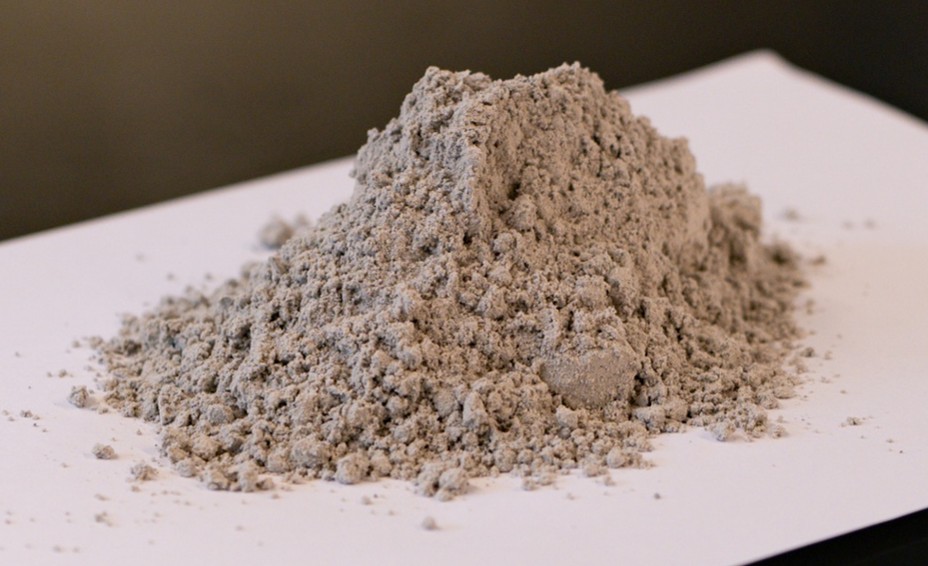
This is where the transformation happens. The combined material reacts in a closed reactor under carefully controlled conditions of temperature, time, reagent concentration, and pH. The result is Z-ONA zeolite, a synthetic mineral with properties comparable to natural zeolites and significant potential for use in industrial water and gas treatment. Laboratory studies have confirmed that Z-ONA zeolite is particularly effective at removing ammonium, heavy metals, and other contaminants from industrial effluents.
Monitoring the process
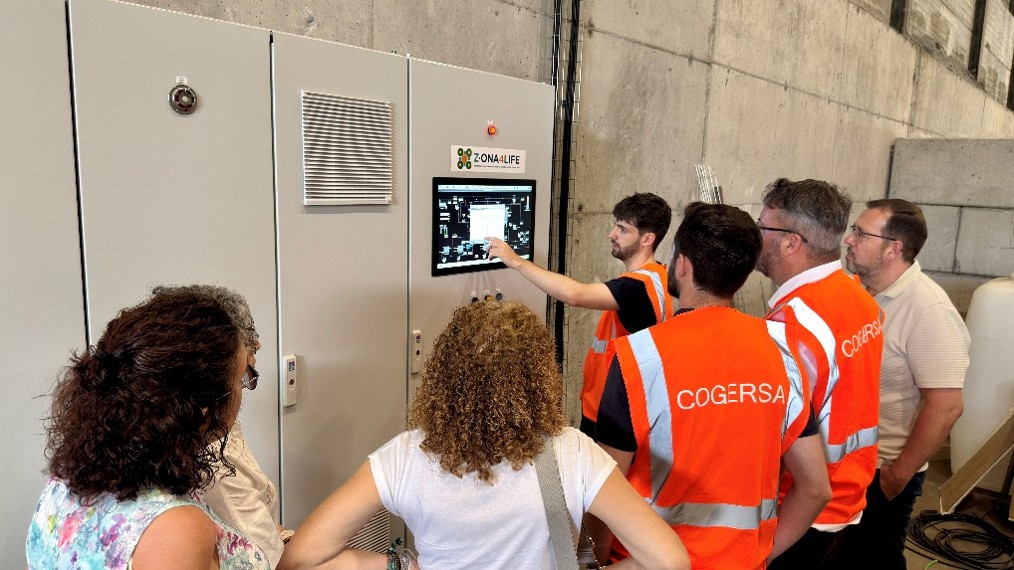
The entire production line is monitored and managed through a central electrical control panel, which allows the team to oversee and adjust every step of the process in real time. The pilot plant has been designed to be multi-functional and adaptable, enabling the team to intervene at any point and modify the process according to operational needs.
What comes next
The first hydraulic test at the Alusigma pilot plant is planned for July 2026, a key moment that will demonstrate whether the pilot plant can successfully produce functional zeolite at an industrial scale. INDEREN is also designing a second demonstration plant for COGERSA's waste treatment facility in Asturias, where Z-ONA zeolite will be tested for the removal of ammonium and heavy metals from complex industrial effluents, with the plant expected to be operational by December 2026.