
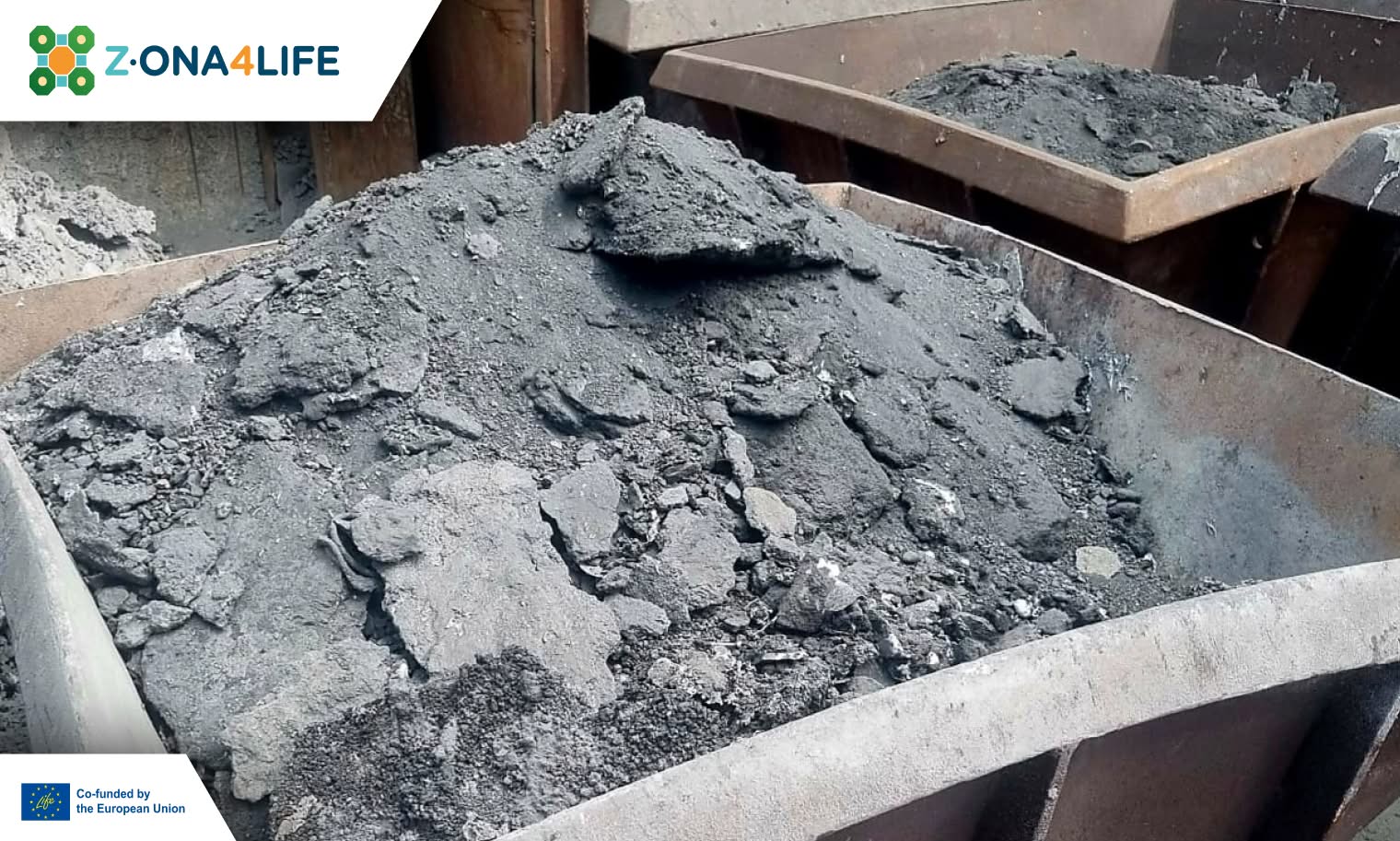
A collaboration between researchers from Eduardo Torroja Institute for Construction Sciences (IETcc-CSIC), Instituto Madrileño de Investigación y Desarrollo Rural, Agrario y Alimentario (IMIDRA), and National Institute of Agricultural and Food Research and Technology (INIA-CSIC), has established a scientific framework for using hazardous industrial waste as a high-value resource for environmental restoration. The findings, recently published in the journal Environmental Technology & Innovation, evaluate the efficacy of zeolites synthesised from hazardous aluminium industry waste in treating soils contaminated with heavy metals and organic pollutants.
The scientific framework
The research focuses on two specific synthetic zeolites: LTA and NaP, synthesised directly from hazardous aluminium waste. By transforming this powdery hazardous solid waste into crystalline microporous aluminosilicates and applying it as a decontamination agent, the team has succeeded in aligning two of the Sustainable Development Goals (SDG 12 and SDG 15).
Key findings
The study addressed the immobilisation of various contaminants such as Arsenic (As), Lead (Pb), Nickel (Ni), and polychlorinated biphenyls (PCBs).
- pH neutralisation: Both zeolites induced a dose-dependent increase in soil pH, effectively mitigating the acidity that often favors metal mobility.
- Element-specific efficacy: The research identified a clear distinction in performance based on zeolite structure. LTA zeolite demonstrated superior immobilisation of As and Ni, whilst NaP zeolite was more effective for the immobilisation of Pb.
- Organic contaminants: While PCB levels decreased during the study via natural biodegradation, the addition of these zeolites did not significantly accelerate this specific process. This result suggests that zeolites could be applied as a ‘dual agent’ for the treatment of complex organic-inorganic matrices.
Institutional alignment: IMIDRA & Z-ONA4LIFE
This research is the result of the ongoing collaboration between Z-ONA4LIFE and IMIDRA. Whilst Z-ONA4LIFE provides the technological innovation, its partnership with IMIDRA is essential for exploring new applications for the Z-ONA zeolite synthesised within the project. By integrating it into IMIDRA’s specialised projects, the collaboration is translating laboratory success into real-world applications in agricultural and rural settings.
The study concludes that zeolites derived from hazardous waste offer a robust and sustainable alternative to conventional soil amendments. The transition from costly waste disposal to a resource recovery cycle directly supports the EU Soil Strategy for 2030 and the global transition towards a circular economy.